Energy investment allowance: how to apply for the Dutch EIA
Investing in solar panels, a heat pump or efficient machinery? With the EIA you deduct 40% of the investment from your profit, provided you report it to RVO within three months of ordering.
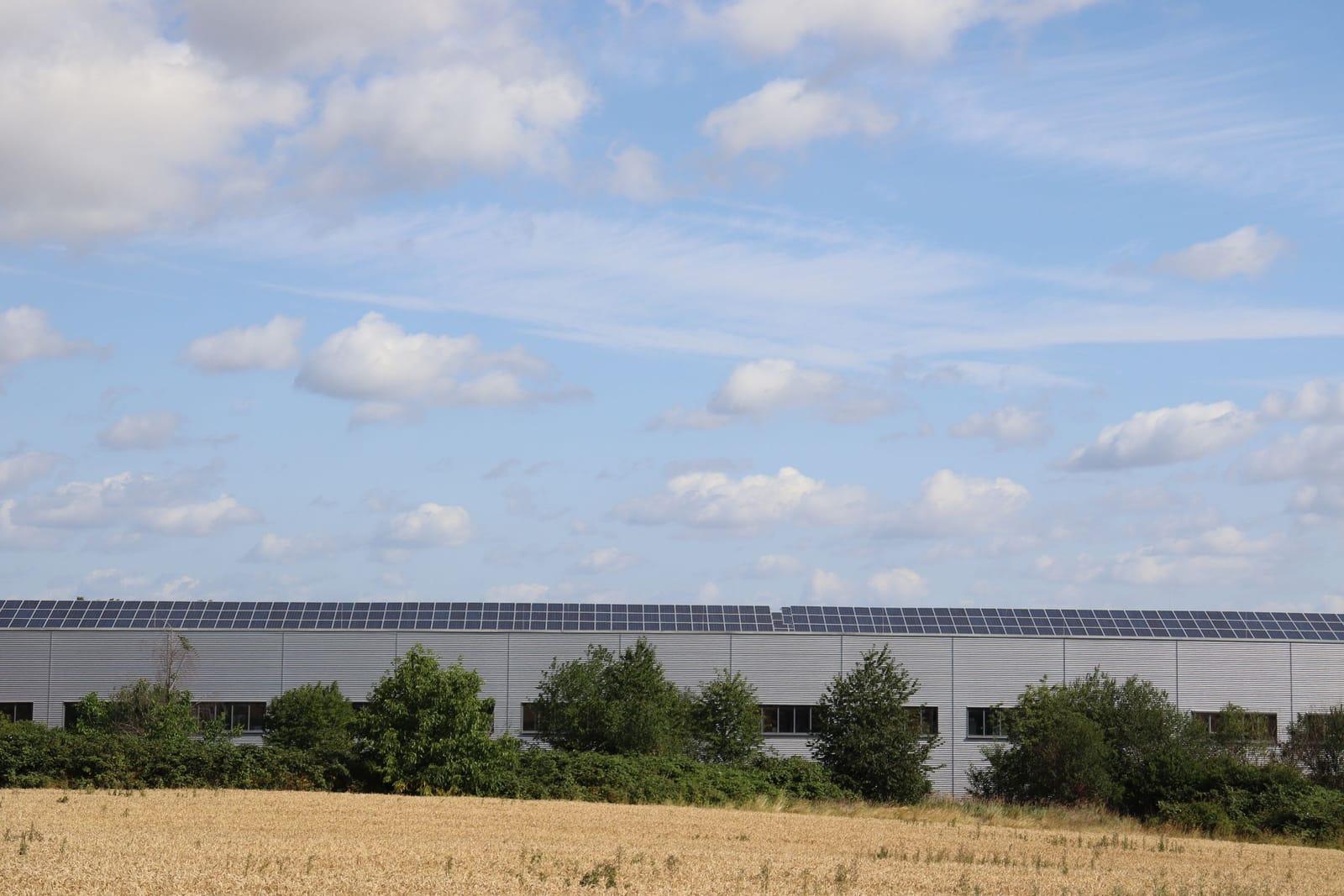
The energy investment allowance (energie-investeringsaftrek, EIA) lets you deduct 40% of an investment in energy-saving equipment or renewable energy from your taxable profit in 2026, on top of normal depreciation, as long as the asset is on the Dutch Energy List. You apply to RVO (the Netherlands Enterprise Agency) within three months of placing the order, and the investment must be at least €2,500.
The end of the year is when many business owners in the Netherlands still invest in solar panels, a heat pump, insulation or more efficient machinery. For the energy investment allowance, what counts is not the invoice but the date you place the order or sign the purchase agreement. That date decides which Energy List applies and when your three-month deadline ends. An order placed at the end of December must therefore be reported to RVO by the end of March.
This guide describes the general procedure as published by RVO and the Belastingdienst (the Dutch tax authority). Whether and when an investment makes sense in your situation is something to discuss with your accountant or tax adviser.
With the EIA the order date is what counts: report late to RVO and you lose the benefit.
How the energy investment allowance works in 2026
According to the Belastingdienst, the EIA is 40% of the investment in 2025 and 2026. RVO puts the total budget for the scheme at €460 million. Even if you are not (yet) making a profit, RVO says the scheme is still worth a look: you can offset the deduction against previous and future years.
RVO assesses your application and, if the decision is positive, issues an EIA statement (EIA-verklaring). You then include it in your income tax or corporate tax return. The Belastingdienst sets the assessment and can still accept or (partly) reject the EIA.
What you need
- A business in the Netherlands (or in Aruba, Curaçao, Sint Maarten or the Caribbean Netherlands) that pays Dutch income tax or corporate tax. Private individuals cannot use the EIA.
- An investment that is on the Energy List (Energielijst) and meets the requirements in its code description, or that fits a generic code for tailor-made investments.
- A new asset: assets that have been used before do not qualify.
- An investment of at least €2,500 per application, excluding VAT if you can reclaim the VAT.
- The order date or the date of the purchase agreement, plus quotes and a cost breakdown in case RVO asks for more information.
- eHerkenning (the Dutch business login) at level 2+ or higher, with an authorisation for RVO services at level eH2+.
- Where required, proof of the necessary permits and certificates.
Step-by-step plan
- Look up your investment on the Energy List. Use the Energy List of the year in which you place the order; for orders in 2026 that is the Energy List 2026. Ask your supplier whether the asset meets the technical requirements of the code.
- Check the conditions. The asset must be new and the amount reported at least €2,500. Land, homes, maintenance costs and passenger cars not intended for professional transport are excluded from the EIA, according to RVO.
- Record the order date. Your deadline starts on the day you place the order or sign the purchase agreement, not on the date of the quote, installation, invoice or payment.
- Arrange eHerkenning in time. Without eHerkenning eH2+ and the right authorisation you cannot log in to the application portal.
- Submit your application within three months. In the portal, choose 'Nieuwe aanvraag' (new application) and the EIA form for the year in which you ordered. You do not need to attach documents; RVO asks for them when it assesses your application. A partnership (vof or maatschap) submits one application on behalf of the partnership.
- Keep the acknowledgement of receipt. Within a few hours you receive an email confirmation with a reference number. The Belastingdienst asks you to keep it with your records.
- Wait for the decision. RVO carries out a technical and financial check and may ask for extra information or visit. RVO usually decides within eight weeks and, if positive, you receive an EIA statement.
- Claim the EIA in your tax return. If you pay everything in one year, you apply the deduction in that year. If payments are spread and the asset goes into use later, you deduct each year what you paid that year, up to the year the asset goes into use at the latest.
Deadlines and costs
For purchase costs you apply within three months of the order. For production costs, such as the work of your own staff or materials from your own stock, a different deadline applies: within three months of the end of the calendar quarter in which you incur the costs. If you put the asset into use during that quarter, you apply within three months of putting it into use. According to RVO, if you are late you lose the tax benefit.
Installation costs, technically necessary provisions and, under conditions, an energy audit also count towards the energy investment allowance. You cannot increase the costs in an application you have already submitted. You can file an additional application if the extra costs are more than €2,500, within the same deadlines. If you disagree with the decision, you can lodge an objection with RVO within six weeks.
Combining the EIA with the KIA, MIA and ISDE
You can combine the EIA with the small-scale investment deduction; read how that works in our guide to the Dutch KIA in 2026. You cannot claim the EIA and the environmental investment allowance (MIA) at the same time for the same asset: you choose one scheme or split the costs into an EIA part and an MIA part. An application cannot be switched to the other scheme afterwards. If you receive an ISDE subsidy for an asset, you cannot apply for the EIA for it.
What changes in 2027
The Tax Plan 2027 bill (Belastingplan 2027), submitted by the Dutch cabinet on 15 September 2026, proposes raising the EIA deduction rate from 40% to 45.5% from 1 January 2027. This is not yet law: both houses of the Dutch parliament still have to approve it. In addition, RVO says the new Energy List is usually published in the Government Gazette (Staatscourant) at the end of December; assets may be added or removed. If you plan to order around the turn of the year, discuss the timing with your adviser. A deadline is also running for innovation projects: read how to apply for WBSO in 2027.
Frequently asked questions about the energy investment allowance
How much is the EIA worth? In 2026 you deduct 40% of the investment from your taxable profit, in addition to normal depreciation. The net benefit depends on your tax rate; on its English-language page RVO puts the average tax reduction at 10%.
Do I report the amount including or excluding VAT? If you can reclaim the VAT, you report the amount excluding VAT. If you cannot, you report the amount including VAT.
How long does the assessment take? According to RVO, you usually receive a decision within eight weeks of applying.
Can I get the EIA for a second-hand asset? No. For the EIA the asset must be new; only previously used parts built into a new asset count.
What if my investment is not on the Energy List? Check whether it fits a generic code. You then have to show, among other things, the payback period and, for buildings, the improvement in the energy label.
Where to go next
The Energy List, the conditions and the application portal are on the RVO website, under Energie-investeringsaftrek; RVO also has an English-language page on the scheme. The rules for claiming the deduction in your tax return are on the Belastingdienst website. Ondernemersplein, the Dutch government's portal for businesses (in English: business.gov.nl), summarises the scheme.
Ask your accountant or tax adviser to check your energy investment allowance plans before you order. Keep track of the other deadlines this autumn with our overview of Dutch business deadlines for November.
Sources
- RVO - Energie-investeringsaftrek (EIA) voor ondernemers (40 %, budget € 460 miljoen, tijdlijn; gecontroleerd 4 november 2026) ·
- RVO - Energie-investeringsaftrek (EIA) aanvragen (stappenplan, termijnen, eHerkenning, beslissing en bezwaar; gecontroleerd 29 oktober 2026) ·
- RVO - Voorwaarden Energie-investeringsaftrek (EIA) (minimaal € 2.500, nieuw bedrijfsmiddel, kosten; gecontroleerd 3 september 2026) ·
- RVO - Veelgestelde vragen EIA (btw, combinatie met KIA, MIA en ISDE; gecontroleerd 3 september 2026) ·
- RVO - EIA in de belastingaangifte (betalingen over meerdere jaren, verrekening bij verlies; gecontroleerd 3 september 2026) ·
- Belastingdienst - Energie-investeringsaftrek (EIA) (40 % in 2025 en 2026; bijgewerkt 9 oktober 2026) ·
- Rijksoverheid - Wetsvoorstel Belastingplan 2027 (voorstel EIA naar 45,5 % per 1 januari 2027) ·
- RVO - Energielijst (nieuwe lijst meestal eind december in de Staatscourant; gecontroleerd 9 oktober 2026) ·