How to apply for WBSO in 2027: steps, rules and deadlines
Developing technically new software, products or processes yourself? The WBSO cuts your payroll tax or gives you an extra deduction. Here is how to apply for 2027.
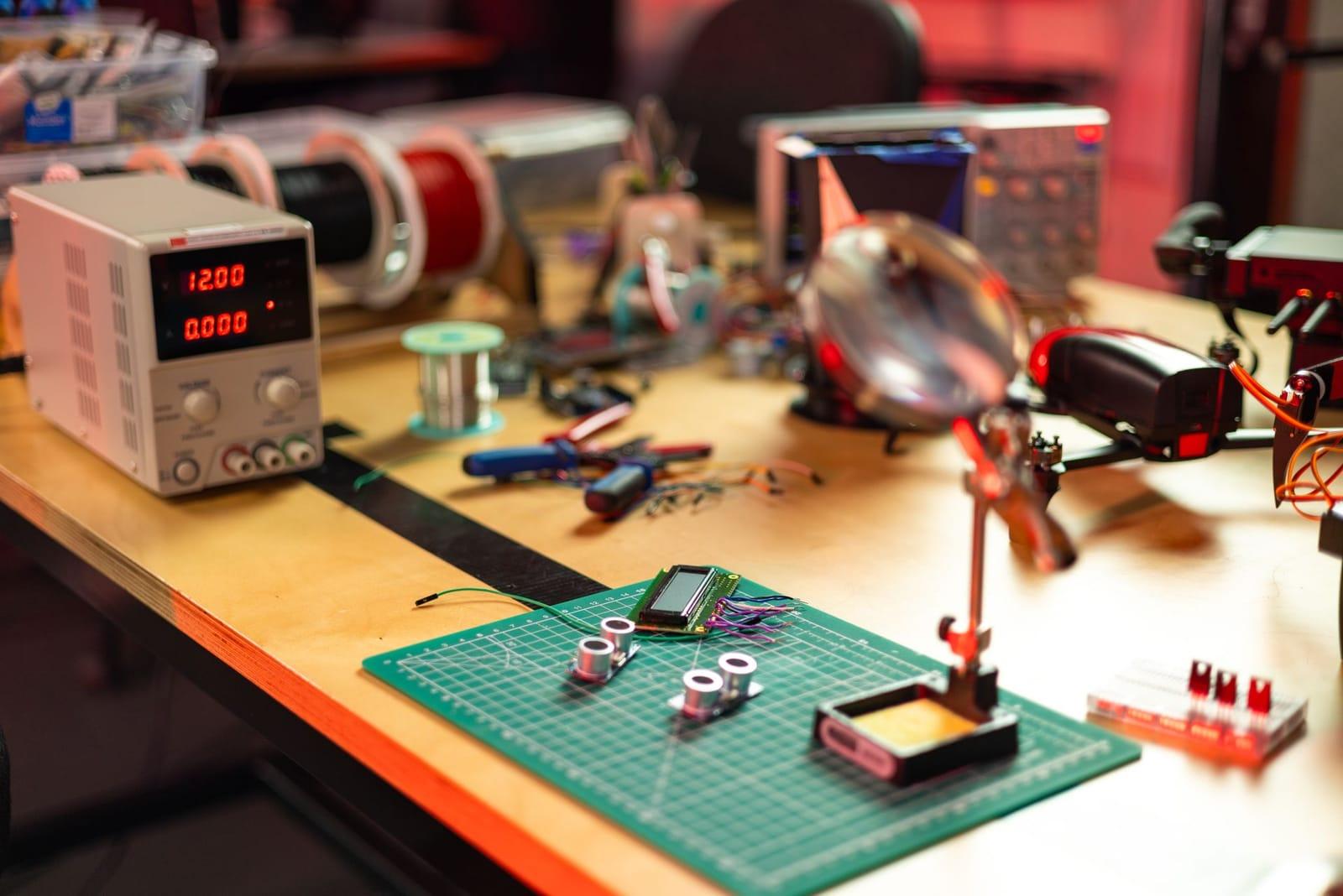
To apply for WBSO, the Dutch R&D tax credit, you file with RVO (the Netherlands Enterprise Agency) before you start the research and development work (S&O), through the RVO login portal using eHerkenning. The scheme is for business owners and companies that develop technically new products, production processes or software themselves; RVO estimates an application takes 1 to 4 hours.
The timing is good. In the Belastingplan 2027 (the 2027 tax plan), presented on Prinsjesdag (15 September 2026), the rates stay the same: 36% in the first bracket, 50% for start-ups and 16% above the bracket limit of €391,020 in R&D costs. For 2027, €1,968 million is available. According to RVO, applications for 2027 can be submitted from mid-November.
The WBSO is not a grant paid into your account. If you have staff, you reduce the payroll tax you remit; if you are self-employed without staff, you get an R&D deduction in your income tax return. If you already handle your Dutch VAT return as a freelancer yourself, you can also apply for WBSO without an adviser, although many companies get help with the project description.
The WBSO rewards planning, not hindsight: without an advance application and time records you get nothing.
What you need to apply for WBSO
- eHerkenning at level 3 or higher, with authorisation for RVO services at level eH3.
- A description per project: what you will develop, why it is technically new for your company, which technical bottlenecks you expect and which solutions you have in mind.
- For technical-scientific research: a research design with the research questions.
- Company details, the project duration and the number of employees.
- With staff: the citizen service numbers (BSN) of employees who did R&D work two years earlier, unless you had no WBSO then (in which case a fixed hourly wage applies).
- If self-employed: at least 1,225 hours per calendar year for your business and at least 500 R&D hours.
Step-by-step plan
- Check whether your work counts as R&D. You develop a tangible product, a production process or software that is technically new for your company, or you carry out technical-scientific research. The work takes place in the EU and you approach it systematically, in phases.
- Work out which rules apply to you. The self-employed without staff and companies with staff have different deadlines and a different type of benefit. Check RVO's WBSO calendar for your dates.
- Arrange eHerkenning level 3 in good time. Without the right level and authorisation you cannot log in to RVO. Request it from an approved supplier well before your deadline.
- Write a technical description for each project. RVO assesses whether the work is technically new and involves real technical risks. Be specific about the problem you want to solve.
- With staff, choose between a fixed rate and actual costs. Besides wage costs you can include R&D costs and expenses, either as a flat rate or based on actual amounts. With actual costs, the allocation must be based on records, not an estimate.
- Submit your application on time. With staff, you apply by the last day of a month and the period starts on the 1st of the next month. For a start on 1 January 2026, the cut-off was 20 December 2025. If self-employed, your period starts on the day you apply. Every period runs until 31 December.
- Record your hours from day one. Log R&D hours and any costs per person, per project and per day. Keep doing so while your application is pending, and keep reports, drawings and test results.
- Report what you realised afterwards. After the calendar year you report the hours and costs you actually spent to RVO. For 2025 the deadline was 31 March 2026.
What the WBSO is worth
With staff, you deduct 36% of your R&D wage costs plus any costs and expenses up to €391,020 from the payroll tax you remit, and 16% on anything above that. Start-ups get 50% in the first bracket. Companies that had no WBSO two years earlier use a fixed R&D hourly wage of €29 in 2026.
If self-employed, you get an R&D deduction of €15,979 in 2026, with an extra €7,996 for start-ups. The amounts for the self-employed in 2027 will be published by the ministry at the end of 2026.
Common mistakes when applying for WBSO
- Applying afterwards: the WBSO only covers future R&D work.
- Counting outsourced work: research by third parties and hours of hired staff, interns or agency workers do not count.
- Presenting routine work as development, or projects without concrete technical bottlenecks.
- No daily time records, so you cannot substantiate the benefit during an audit.
What changes in 2027
The fixed R&D hourly wage rises from €29 to €33, the first adjustment since 2008. The separate pharmaceutical guidance lapses, so applicants from that sector fall under the general rules. For prototypes, the ministry is looking at a clearer line; details will follow in the Handleiding WBSO 2027 (WBSO 2027 manual) from November 2026. The flat-rate Innovatiebox (innovation box) for SMEs is also being widened, and you will obtain the R&D declaration for it through your WBSO application. All of this is subject to approval by the Eerste Kamer (Dutch Senate).
Frequently asked questions about applying for WBSO
Can I apply for WBSO retroactively? No. You can only apply for WBSO for work that has yet to take place. Hours before the start date of your period do not count.
Do I need to apply for WBSO every year? Yes. An application period runs automatically until 31 December; for the next year you submit a new application.
How much is the WBSO worth for a freelancer? In 2026 the R&D deduction is €15,979, plus €7,996 if you are a start-up. You do need at least 500 R&D hours and 1,225 hours for your business.
What if I start a new project during the year? With staff, you can apply each month for the following month; if self-employed, the period starts on the day you apply. There is a final application date each year; for 2026 it was 30 September.
Where to go next
RVO assesses the application and publishes the WBSO calendar and the Handleiding WBSO 2027. The Belastingdienst (the Dutch tax authority) processes the benefit in your payroll tax return or income tax return. If you have just registered your business, the latest KVK start-up figures show how large that group is. For your own projects and the choice between a flat rate and actual costs, an accountant or innovation adviser is the right contact.