Construction labour shortage: Netherlands needs 73,000 workers
The EIB counts 47,000 replacements and 26,000 extra workers the building sector must find by 2030, while Defensie grows to 125,000 staff. What the cao, career changers and the SLIM subsidy mean for a building firm now.
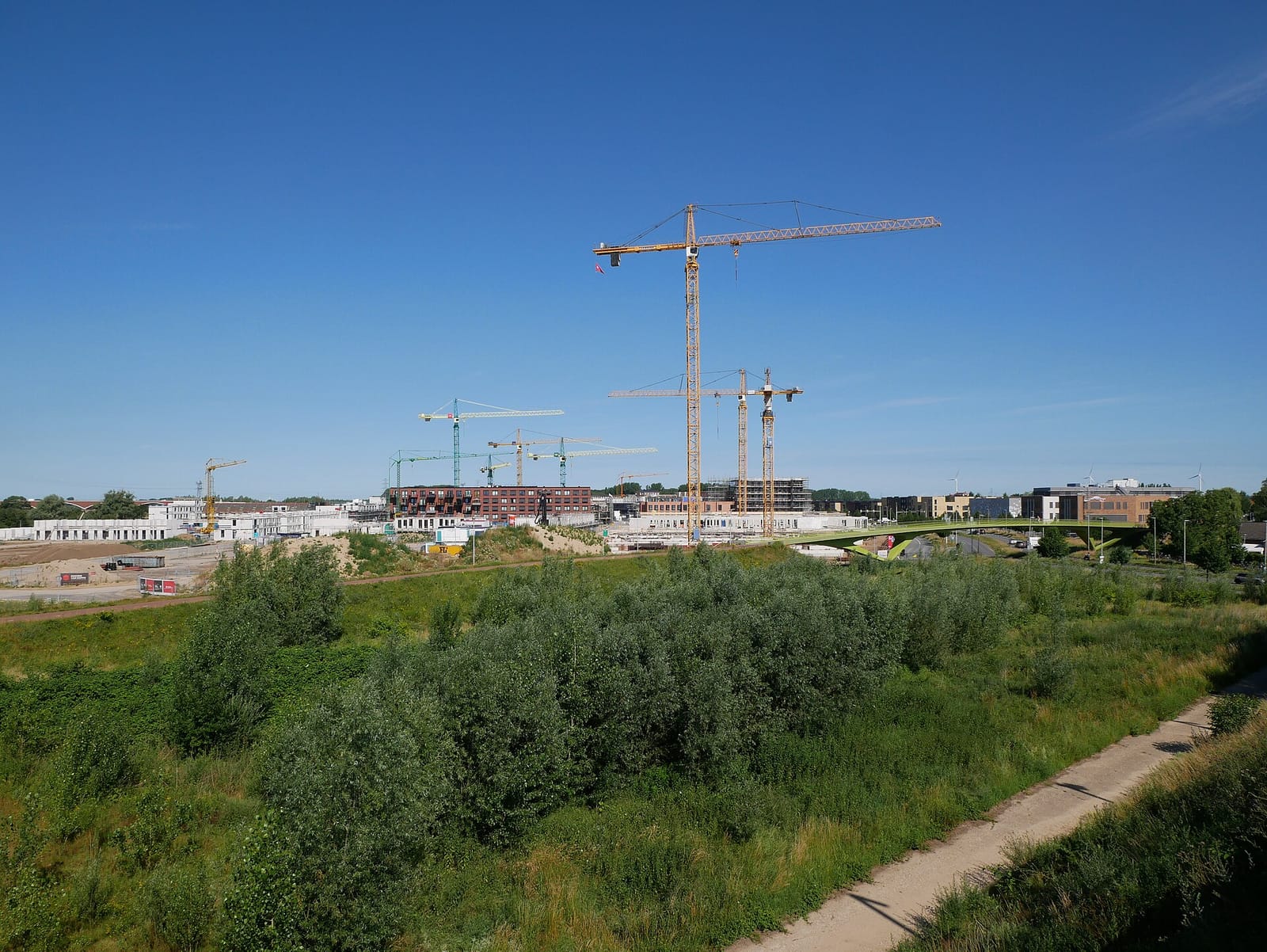
The construction labour shortage in the Netherlands is widening: between 2027 and 2030 the sector must recruit 73,000 new workers, the EIB (Economisch Instituut voor de Bouw) calculated on 22 October. Defensie, the Dutch armed forces, wants to grow from 80,000 to 125,000 staff and is recruiting the same fitters, electricians and machine operators.
Of those 73,000, some 47,000 replace colleagues who retire or become unfit for work and 26,000 cover growth. Roughly 52,000 will come from vocational training; the remaining 21,000-plus must be career changers from other sectors or from abroad.
In the first half of 2026 the sector had 74 open vacancies per thousand jobs (79 in 2025), well above the Dutch average, and 23% of building firms report work stalling for lack of staff, up from 20%.
Nine in ten new tradespeople the building sector still has to find itself, Defensie or not.
Defensie recruits the same fitters and machine operators
Defensie plans to grow from almost 80,000 people in 2025 to 100,000 in 2030 and about 125,000 in 2035. With the defence industry, that is around 5,100 extra full-time jobs a year, the EIB calculates. No sector resembles Defensie as closely as construction: 87% male, mostly vocationally trained, physical teamwork.
The EIB puts the extra recruitment pressure on construction at about 1,100 workers a year, almost 10% of the 13,000-plus people who entered from training in 2025, concentrated in the tightest jobs: fitters, electricians, machine operators and civil engineering site managers.
Meanwhile the cabinet keeps its target of 100,000 new homes a year; in 2025 the country added almost 80,000, according to CBS (Statistics Netherlands). EIB director Taco van Hoek told ANP that the Netherlands must choose more sharply what gets built when.
What the construction labour shortage means for your firm
For a mid-sized building or installation firm, pay is largely fixed: the cao Bouw & Infra 2025-2027 (the sector’s collective agreement) raises wages by 10%, including 4% on 1 January 2026 and 1.5% on 1 January 2027, and runs until 31 March 2027. Bidding above that means competing with Defensie’s national recruitment campaign and its paid one-year service scheme for 18- to 27-year-olds.
Career changers are the second route, with subsidy. The SLIM scheme of the Ministry of Social Affairs (SZW) covers 60% of the cost of a training plan, career advice or in-company learning method, up to €25,000 per SME. The 2026 window closed on 7 September; 2027 dates are not yet published. More on hiring in our People section.
The EIB does not expect a strong inflow from abroad, given stricter housing rules for migrant workers and enforcement against false self-employment. Defensie makes the construction labour shortage worse by a ‘not dominant’ 5% to 10% of annual intake needs. The other 90% the sector must still find itself.
Sources
- EIB – Trends op de bouwarbeidsmarkt 2026-2030 ·
- ANP via nieuws.nl – EIB: Nederland moet doelen uitstellen om personeelstekort bouw ·
- CBS – Derde jaar op rij met minder woningen erbij ·
- CNV – Onderhandelingsresultaat cao Bouw & Infra 2025-2027 ·
- Uitvoering van Beleid (SZW) – Openstelling aanvraagtijdvak SLIM mkb 19 augustus 2026 ·